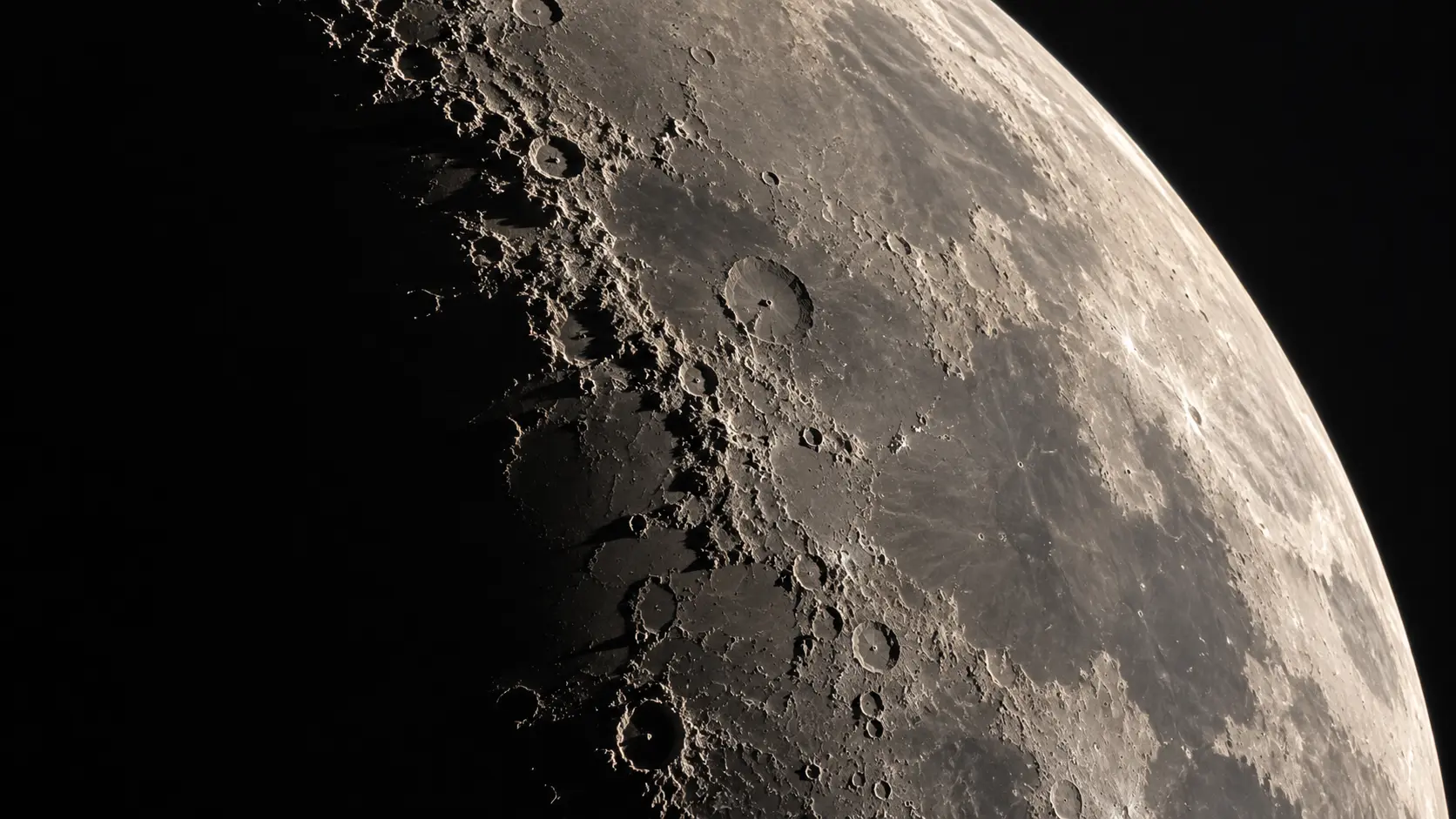
Ask most astrophotographers about the Moon and you’ll hear the same thing: nice first target, then you move on. We spent a full lunation, new moon to new moon, imaging it every clear night, and came away convinced the Moon is where technique is really made.
The terminator never repeats
The line between lunar day and night crawls across a different landscape every evening. A crater that looks flat and uninteresting at full phase becomes a dramatic well of shadow two nights later. Plato, Copernicus, the Straight Wall: each has a best night per lunation, and it’s rarely the night you expect.
Seeing rules everything
Lunar imaging is a fight with the atmosphere, fought at high magnification. We capture thousands of short video frames and stack only the sharpest fraction, a technique borrowed from planetary work. On a night of poor seeing, keeping 5% of frames still beats any single exposure. On a rare steady night, the results look like they were taken from orbit.
What it teaches
Focus discipline, honest evaluation of conditions, patience with processing. Every skill that lunar work forces on you pays off later on Jupiter, Saturn, and tight double stars. The Moon is not the beginner’s target you graduate from. It’s the training ground you keep coming back to.